Netanyahu Orders Heavy Hand in Hebron Ahead of Vote
Israeli forces demolished 86 acres in Hebron, displacing roughly 1,500 residents in a move critics link to the upcoming national elections.
By Anastasia Volkova ·
Israeli Prime Minister Benjamin Netanyahu has directed a significant military operation in the West Bank city of Hebron, ordering the destruction of a residential district in the wake of a deadly checkpoint attack. The move comes just four days before national elections, with the leadership promising a vigorous response to recent violence. This action has resulted in the displacement of hundreds of families and the sealing of the city, creating a notable shift in the region's security and logistical posture.
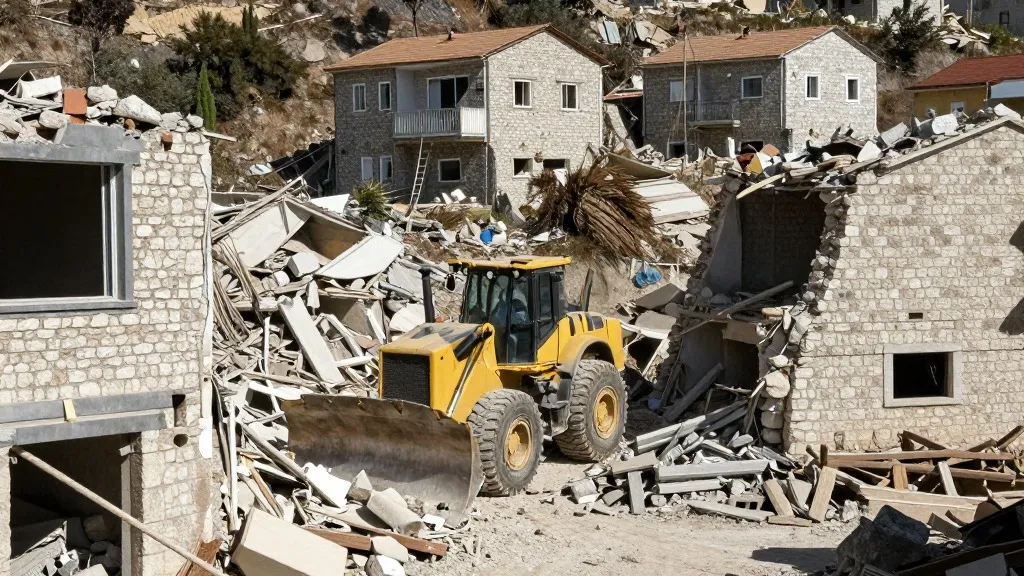
The scale of the demolition is substantial by local standards. Hebron municipality officials estimate that 35 hectares, equivalent to 86 acres, in the Ein Deir Baha district have been destroyed or designated for destruction. By Saturday afternoon, approximately 1,500 people had been forced from their homes. The city, which holds a population of 250,000, was sealed off with checkpoints established at every entry point, restricting movement and trade in the area.
Visual evidence provided by local residents highlights the physical extent of the operation. Footage shows entire urban blocks reduced to rubble, with soldiers marking structures and bulldozers removing stone walls. One prominent residential building, owned by a well-known local family, was draped in Israeli flags and converted into a temporary military headquarters. These images underscore the intensity of the ground-level operations and the rapid change in land use within the district.
The immediate catalyst for this response was an attack by two gunmen on a military checkpoint outside the city on Friday. Following a 20-minute engagement, two soldiers were killed and three were wounded, while both attackers were also slain. Authorities identified the Ein Deir Baha district as the home base for the gunmen, a link that municipal leaders argue has led to a disproportionate response affecting a wider population.
Political figures have been highly visible in their handling of the crisis. Finance Minister Bezalel Smotrich, who is running for election with a smaller coalition party, was filmed in body armor overseeing the demolitions. He stated that he ordered the immediate demolition of a row of structures adjacent to the attack site and called for a comprehensive military campaign similar to those conducted in Gaza and Lebanon. Netanyahu visited the checkpoint site and declared that Israel would act to destroy the location, signaling a hardline stance to voters.
Local civil rights groups are expressing concern over the proportionality of the measures. Issa Amro, a Hebron activist, described the operation as collective punishment. He noted that his sister's family was among those evicted and questioned whether the actions are driven by election propaganda or a long-term strategic plan. His remarks highlight the human cost and the uncertainty facing residents who remain in the sealed city.
Logistical arrangements for displaced residents are currently being managed by the municipality. A spokesperson indicated that around 300 families have been formally evicted, with many staying with relatives. Community halls and play areas have been opened to accommodate others. The Palestinian news agency Wafa reported that further displacement of 2,500 people is planned, suggesting the operation may expand in scope in the coming days.
The Israeli army has been approached for comment regarding the specific operations and the widespread destruction seen in public videos. With elections imminent, the situation in Hebron is likely to remain a focal point for political debate and market observers tracking regional stability. The balance between security objectives and electoral timing continues to define the current trajectory of the conflict in the West Bank.
Source: The Guardian
More Business · World news · Consumer Watch · Report a business