Record Exodus Threatens Israel's Economic Core Ahead of Critical Election
A study reveals nearly 100,000 Israelis have left since 2023, and experts warn that next week's vote could accelerate the departure of skilled workers and corporate assets.
By Tariq Mahmoud ·
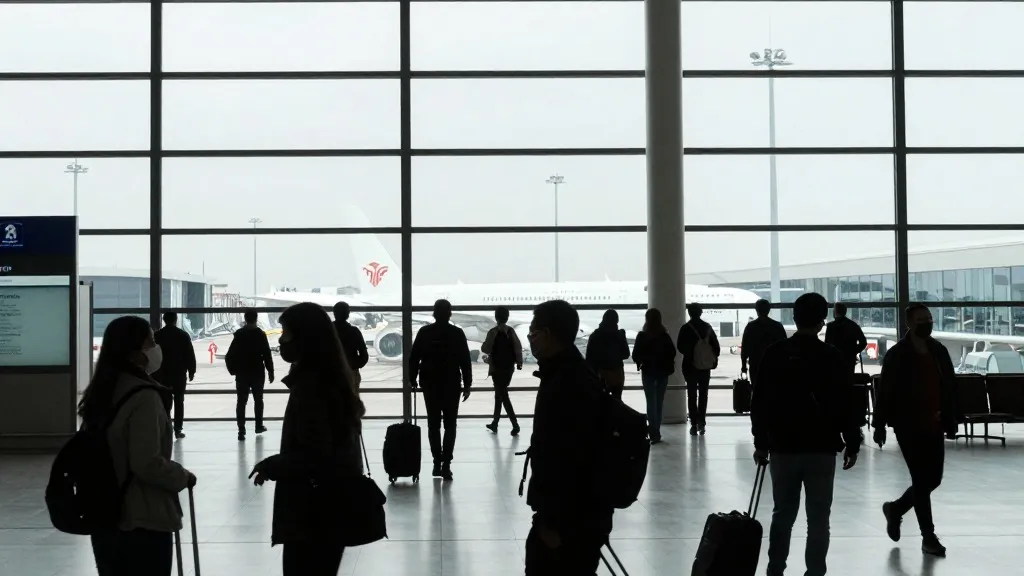
Nearly 100,000 Israelis have departed the country between 2023 and 2024, marking the highest rate of emigration in recorded history. This sustained outflow creates significant uncertainty for the national economy, a concern that intensifies as voters head to the polls next week. The upcoming election may serve as a decisive factor in whether this trend stabilizes or accelerates further.
Itai Ater, a professor at the Coller School of Management at Tel Aviv University, leads the research on this demographic shift. His team analyzed data from the Central Bureau of Statistics to publish a study this February. The findings show that 50,000 residents left in 2023 and 49,000 followed in 2024. Preliminary indicators suggest that this pattern persisted throughout 2025. Ater notes that the country of approximately 10 million people has faced war and economic instability during this period. He also points to the ongoing corruption trial of Prime Minister Benjamin Netanyahu, which began in 2020 without a final verdict.
The departure criteria for the study required individuals to be absent for at least three consecutive months and to spend more than 270 days outside the country during their first year away. Ater explains that many citizens are questioning whether they wish to raise families in such an environment. He stated that he sympathizes with those who answer no to that question. The turbulence since 2023 has included the Hamas attack in southern Israel, which killed roughly 1,200 people and resulted in 250 hostages. Israel responded with a major military campaign in the Gaza Strip. Although a fragile ceasefire took effect in October 2025, Israel still controls about 60 percent of the enclave and maintains regular military activity there.
The political landscape adds to the economic anxiety. Prime Minister Benjamin Netanyahu, the longest-serving leader in the nation's history, is seeking power again. Current polls indicate his far-right bloc will likely fail to secure the 61 Knesset seats required for a governing majority. A rival group led by Gadi Eisenkot of the Yashar party is also expected to fall short of a majority. This forces the typical post-election coalition maneuvering, a process in which Netanyahu has demonstrated long-standing skill.
Ater warns that if the political status quo remains unchanged, emigration figures could rise dramatically. He emphasized that these numbers are likely to go up significantly. Avigail Ben-Porat, a 50-year-old single mother living in Kiryat Shmona near the Lebanese border, reflects this sentiment. She dreams of leaving but lacks the financial means to do so. She reports regularly hearing rocket fire and notes that many friends have relocated to Portugal, Canada, Thailand, and India.
Researchers are particularly concerned about the professional profiles of those leaving. The study highlights a sharp increase in the departure of doctors, engineers, and individuals holding Ph.D.s during the last two years. Specifically, there were net departures of 2,360 engineers and 509 doctors. Ater argues that the Israeli economy relies heavily on this human capital, citing the tech industry, academia, and healthcare sectors as key areas of concern.
Corporate entities are also reevaluating their presence in the country. Liam Schwartz, who heads the corporate immigration department at the Tel Aviv law firm Goldfarb, Gross, Seligman, reports that some firms face pressure from non-Israeli shareholders. These investors are worried about the viability of operating from Israel and are increasingly willing to shift portions of their workforce to North America or Europe. Schwartz traces this discontent to January 2023, when the government proposed judicial reforms intended to reduce the powers of the Supreme Court. He stated that many feel the government is no longer meeting its part of the social contract.
The upcoming vote is viewed as a potential watershed moment for the rate of emigration. Ater described the situation as a strategic risk to Israel as a democracy and a liberal country. He noted that this trend is a concern not only for the Middle East but for the wider world as well. The outcome of next week's election will likely determine whether the country can retain its skilled workforce and corporate assets or if the exodus will continue to expand.
Source: CBC News
More Business · World news · Consumer Watch · Report a business