Grayslake Residents Press Rep. Schneider on Inflation Act, Abortion Ruling at Town Meeting
About 40 people questioned U.S. Rep. Brad Schneider on the newly signed Inflation Reduction Act, corporate taxes and the fallout from the Supreme Court's Dobbs decision.
By Ken Adams ·
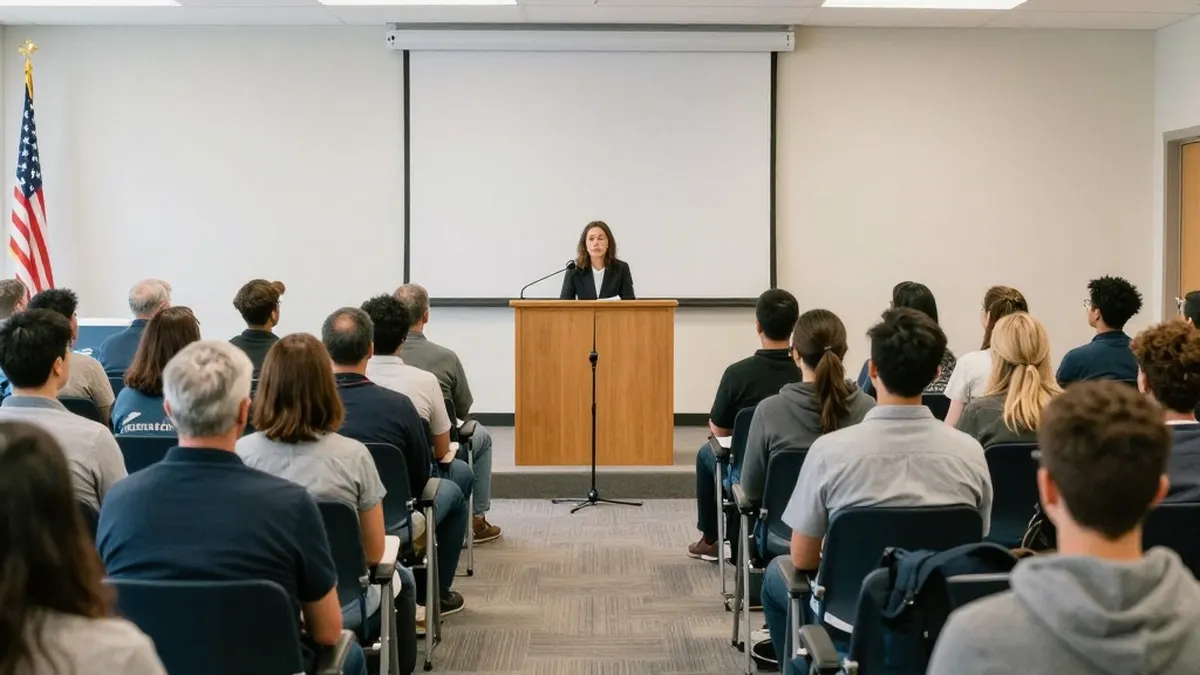
Questions about the Inflation Reduction Act and abortion rights dominated a town meeting Thursday in Grayslake, where U.S. Rep. Brad Schneider, D-Highland Park, took questions from residents on recent actions in Washington.
The Congress on Your Corner event, held at the College of Lake County, drew roughly 40 attendees. President Joseph Biden signed the climate, health care and tax legislation on Tuesday, and residents wanted to know what it would mean for them in practical terms.
Tim Mocarski asked how the law would help people soon. Schneider said it should lower health care and energy costs. Expanding and increasing energy production would push prices down, he said, and letting the government negotiate drug prices for Medicare recipients would also matter. He argued the effects would spread beyond Medicare. "The idea is it will have ripple effects so (for) people who are not on Medicare the pricing is somewhat similar," he said, adding that Americans pay more for the same medicines than people in other countries, where such negotiation takes place.
Schneider said falling medication prices should also bring down insurance costs, leaving people with more money for other expenses, and that the law would give more people access to insurance.
A man identified only as Mike, who was attending his first town hall and declined to give his last name, was skeptical. He said he could not see how raising corporate taxes would curb inflation, since the cost would trickle down to consumers. "I’m not seeing a lot that’s being done to help the everyday citizen. I’m struggling," he said, adding that he knows people his age making $2,000 a month net and that he is fortunate to earn more.
Schneider said the law raises no individual taxes and did not dispute that businesses might raise prices to offset a tax increase. He said large, high-earning corporations should pay a fair share for the services that benefit them. Under the act, he said, businesses earning more than $1 billion a year must pay at least 15% in taxes. He noted that companies shipping goods by truck use roads built with tax dollars, and said firms such as Amazon and Google earn billions in profit while paying close to nothing in taxes. They also draw on a workforce educated through publicly funded schools, he said.
He added that the legislation offers incentives for people who switch to alternative energy, includes other measures to cut carbon emissions and reduces the federal deficit.
Abortion also came up. Warren Schumacher said he supports a woman's right to choose but does not believe the right should be absolute. "There has to be a point at which a pregnancy has to be allowed to go through," he said, asking whether society should at some stage say a child should be allowed to come into the world.
Schneider said that before the U.S. Supreme Court overturned Roe v. Wade, limits already applied as a pregnancy progressed toward birth. The Dobbs v. Jackson Women’s Health Organization ruling ended that framework and let states regulate or ban abortion. He said late-term abortions typically occur when "there is a catastrophic event with a pregnancy that the baby isn’t viable or the baby is a threat to the mother’s health," and that the decision should rest with the woman.
Schneider cited stories he has read since Dobbs in which a fetus dies and the mother is told she must carry it to term because removal is technically an abortion. "Before Dobbs, that’s not what happened," he said.
Source: Chicago Tribune