Tennessee execution team faces criticism after Christa Pike survives failed injection
Medical experts argue that the chaotic procedure left Pike alive due to significant procedural errors and lack of oversight.
By Zanele Khumalo ·
Christa Pike is alive because of what medical experts now call a series of serious mistakes during her execution attempt. She survived a lethal dose of pentobarbital that should have killed her. The state of Tennessee has paused all future executions while it reviews the case. This pause gives the nation time to reconsider the use of the death penalty.
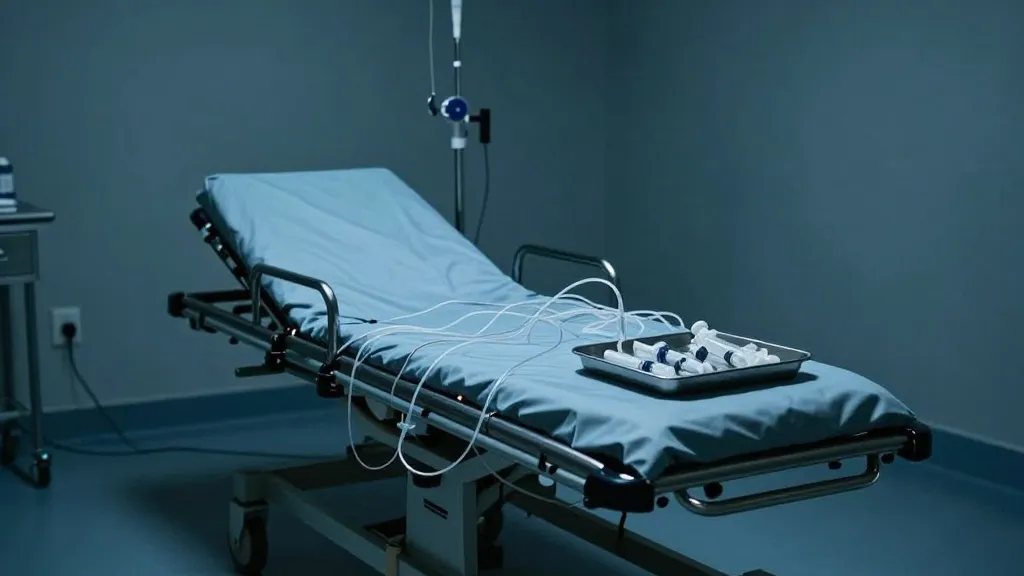
New details from court filings reveal how the procedure on 30 September unfolded. Pike’s lawyer, Randy Spivey, described a struggle that lasted nearly an hour. The IV team could not secure a line in her arms. They used about ten needles and repeatedly poked her without success. At several points, staff worried her veins had blown. Pike grimaced and said her arm was really burning. The vial label instructs staff to stop if a patient complains of pain.
The team attempted to locate a vein using ultrasound. Experts note this requires years of training and many practice sessions. The staff clearly did not know how to use the equipment. By 7:23 pm, saline was pushed through the line with difficulty. One minute later, the team declared the IV set. They proceeded with the injection. A standard dose is 50cc of pentobarbital per arm. The team used a 24-gauge needle. This size is typically used for babies or small children.
Jonathan Groner, an emeritus professor of clinical surgery at Ohio State University, condemned the lack of leadership. He stated that the level of incompetence was astounding. He noted that no clinician would give a caustic drug through a line that did not flush easily. Joel Zivot, a professor of anesthesiology and surgery in Atlanta, provided expert testimony. He said there was no way to push the required volume through such a small catheter without blowing the vein. He listed failings including a poorly written protocol and the use of technology the team may not have been permitted to use.
Pike was sentenced to death for the 1995 murder of a classmate, Colleen Slemmer. She was 18 at the time of the crime. After the failed execution, she spent several days on a ventilator. Lawyers believed she was brain-dead. She returned to her cell after ten days in hospital. She can now talk and walk. Her long-term health prospects remain unknown. Her legal team had warned the state about her small and compromised veins before the attempt.
The case highlights deep problems with lethal injection as the dominant method of execution in the United States. Groner described the process as a medical charade. He argued that the ultimate penalty is death, not torture followed by death. Zivot said the team pressed on when they should have stopped. He emphasized that medicine focuses on safety, accountability, and training. None of those elements were visible in Pike’s execution chamber.
Source: The Guardian