Tesla Admits Its Self-Driving Software Needs a New Map Strategy
Tesla is developing proprietary mapping technology to resolve persistent navigation errors in its Full Self-Driving system.
By William Parker ·
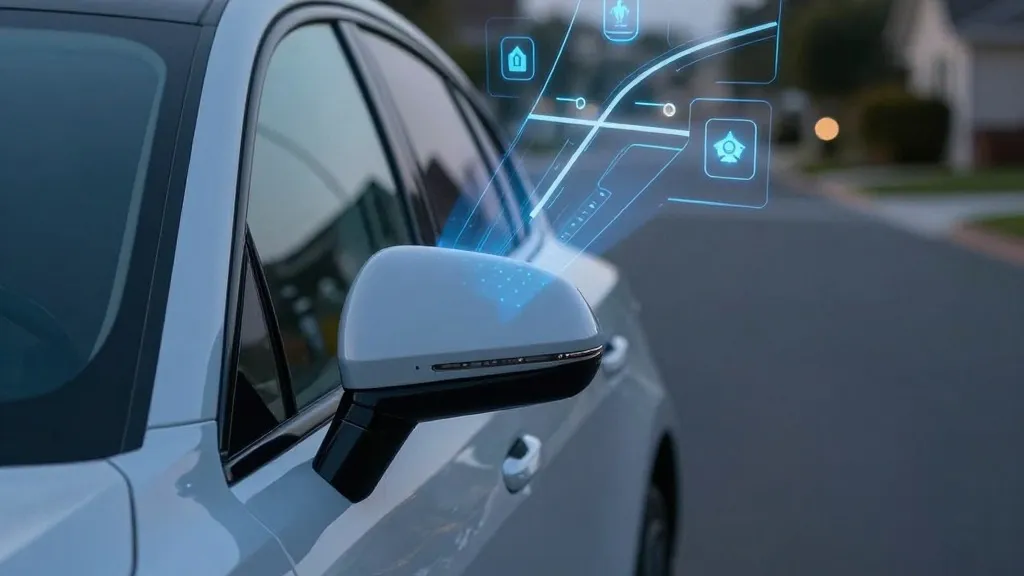
Drivers using Tesla’s Full Self-Driving (FSD) system have frequently struggled with basic tasks like reading speed limit signs, finding parking spots, and selecting efficient routes. To address these common frustrations, Tesla has announced it is developing its own internal mapping architecture. This development marks a significant departure from the company’s long-standing public stance that detailed maps are unnecessary for advanced autonomous driving.
The initiative was detailed by Ashok Elluswamy, Tesla’s VP of AI, during the company’s Q3 2026 earnings call. He confirmed that Tesla is building a new AI-based mapping and navigation system that relies on data collected from the company’s vast fleet of vehicles. Rather than licensing third-party maps, this new system will use collective fleet learning to understand road environments. It is also designed to adapt to individual driver preferences and respond to voice commands, aiming to provide a more personalized and accurate driving experience.
The rollout of this technology is planned to begin with FSD version 15. Initially, the system will manage the start and end of trips. Over the coming months, Tesla expects the new map layer to take over broader navigation, parking, and destination handling. This phased approach allows the company to integrate the new data streams without overwhelming the existing vision-based software, gradually shifting reliance from pure camera input to a hybrid model that includes structured map data.
This pivot is notable because Tesla’s CEO previously argued that relying on high-precision maps made self-driving systems brittle. In 2019, Elon Musk criticized detailed lane maps as a mistake, claiming that cameras and AI alone could solve driving anywhere. That position was part of a broader dismissal of lidar and the mapping strategies used by competitors like Waymo. However, recent performance issues have suggested that vision alone is insufficient for certain environmental cues, particularly static road signs and complex urban infrastructure.
The need for better mapping is evident in recent testing results. A Belgian road safety group found that FSD exceeded speed limits in 55% of 30 km/h zones in Brussels, often displaying incorrect limits on the dashboard. Additionally, the U.S. National Highway Traffic Safety Administration is weighing an investigation into claims that Tesla Robotaxis have sped through school zones. These incidents highlight that while the vision system excels at dynamic objects, it still struggles with static environmental details that maps can reliably provide.
By building its own maps, Tesla is converging on a strategy similar to Waymo’s, which uses sensor-equipped vehicles to create and maintain detailed city maps. While Tesla is not yet using centimeter-level high-definition maps, its fleet-built data will likely increase in detail over time. This approach supports Tesla’s current Robotaxi operations, which function within specific geofenced areas. As the company pushes toward unsupervised FSD for consumer vehicles, this new mapping layer may be the critical component needed to bridge the gap between current capabilities and full autonomy.
Source: Electrek