North Korea Unleashes Drone Swarms and Precision Missiles in Rapid Military Surge
Russian support has enabled Pyongyang to mass-produce attack drones and refine ballistic technology, prompting a sharp and unprecedented response from Seoul.
By Jayden Sweiler ·
The strategic balance in East Asia is shifting rapidly as North Korea accelerates its modernization efforts with significant Russian assistance.
According to The New York Times, Pyongyang is no longer just refining its ballistic missile program; it has entered a phase of mass-producing attack drones. This surge in capability is driven by a deepening military partnership with Moscow, which is trading its latest defense technologies for North Korean soldiers, labor, and weapons.
The roots of this intensified cooperation lie in the full-scale invasion of Ukraine. Since that conflict began, the two nations have renewed their military ties. North Korea has used this window to overhaul its armed forces, relying heavily on Russian expertise to upgrade its equipment and tactics.
Recent events have highlighted the speed of this progress. In early October, the North tested a tactical ballistic missile. Pyongyang claims the weapon can carry a nuclear payload with a range of 1,000 km (621 miles). South Korean and Japanese estimates placed the actual flight distance at approximately 700 km (430 miles), a figure that still underscores the missile's destructive potential.
Seoul's reaction to this latest test marked a notable departure from past protocols. Historically, South Korea would issue brief, stern statements calling such launches provocative. This time, however, the response was kinetic. Just five days after the North Korean launch, South Korea conducted its first test fire of a hypersonic ballistic missile. President Lee Jae Myung personally observed the event. The New York Times describes this move as a clear signal that Seoul is growing increasingly anxious about the rapid advancement of its neighbor's missile technology.
Analysts point to specific Russian contributions as the key to this leap in capability. Anton Ponomarenko, an analyst, notes that access to Russian deployment data and feedback has allowed North Korea to significantly improve the accuracy and maneuverability of its weapons. Ponomarenko argues that these upgrades make the threat posed to South Korea more substantial and immediate.
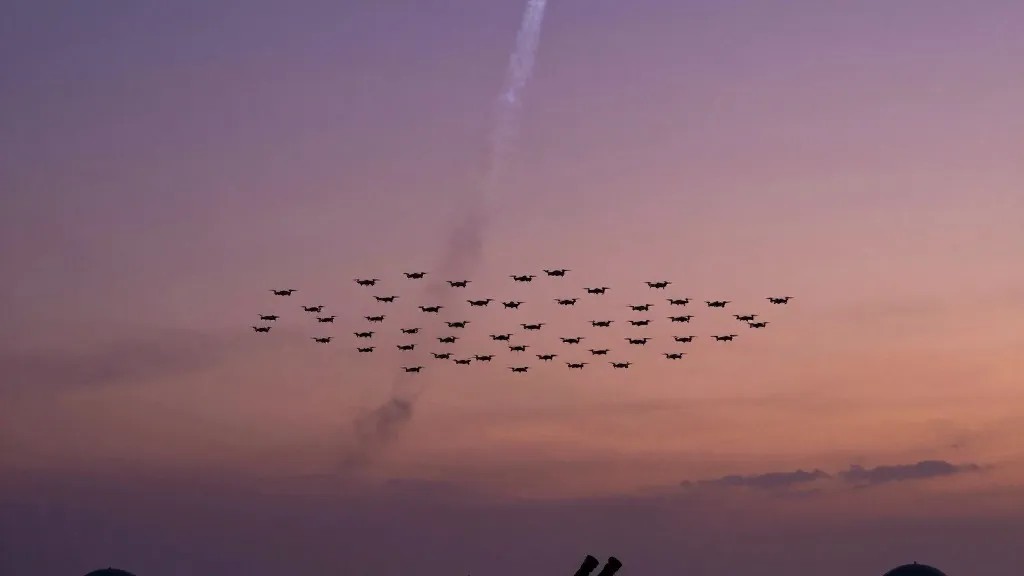
Beyond missiles, Russia has been instrumental in helping North Korea build and produce unmanned systems in large quantities. The New York Times highlights that Pyongyang has studied conflicts in Ukraine and the Middle East, observing how inexpensive drones can saturate and overwhelm expensive air defense networks. In a military drill last month, North Korea demonstrated this new tactic. A swarm of drones attacked a target island while cruise and ballistic missiles struck simultaneously from different angles.
This combined-arms approach suggests a new doctrine for North Korean warfare. The newspaper argues that these evolving tactics will eventually force South Korea and its allies to redesign their air defense architectures. Such a redesign would come at an exorbitant cost, placing a significant financial burden on regional allies.
This report aligns with other recent accounts of the Russia-North Korea partnership. In September, Bloomberg reported that Russia is utilizing North Korean citizens to manufacture military drones, particularly at facilities in Alabuga, Tatarstan. Estimates suggest that up to 25,000 North Koreans are currently working at Russian military plants. Additionally, a North Korean missile forces unit has begun deploying in western Russia. This unit could be equipped with 120 ballistic missiles and six launchers, potentially for strikes against Ukraine.
The momentum of this partnership has been building for months. Ukrainska Pravda previously reported that Russia asked North Korea in August to supply KN-30 ballistic missiles. Earlier in June 2026, Pyongyang announced the testing of a modernized 240mm multiple-launch rocket system, a tactical ballistic missile, and a 155mm long-range artillery shell. These developments indicate a sustained and accelerating effort to modernize North Korea's military arsenal.
As the alliance deepens, the implications for regional security continue to grow. The exchange of technology for manpower and hardware creates a self-sustaining cycle of military enhancement. With mass drone production now underway and ballistic missiles becoming more precise, the strategic landscape in East Asia is facing a new era of complexity.
Source: Ukrainska Pravda